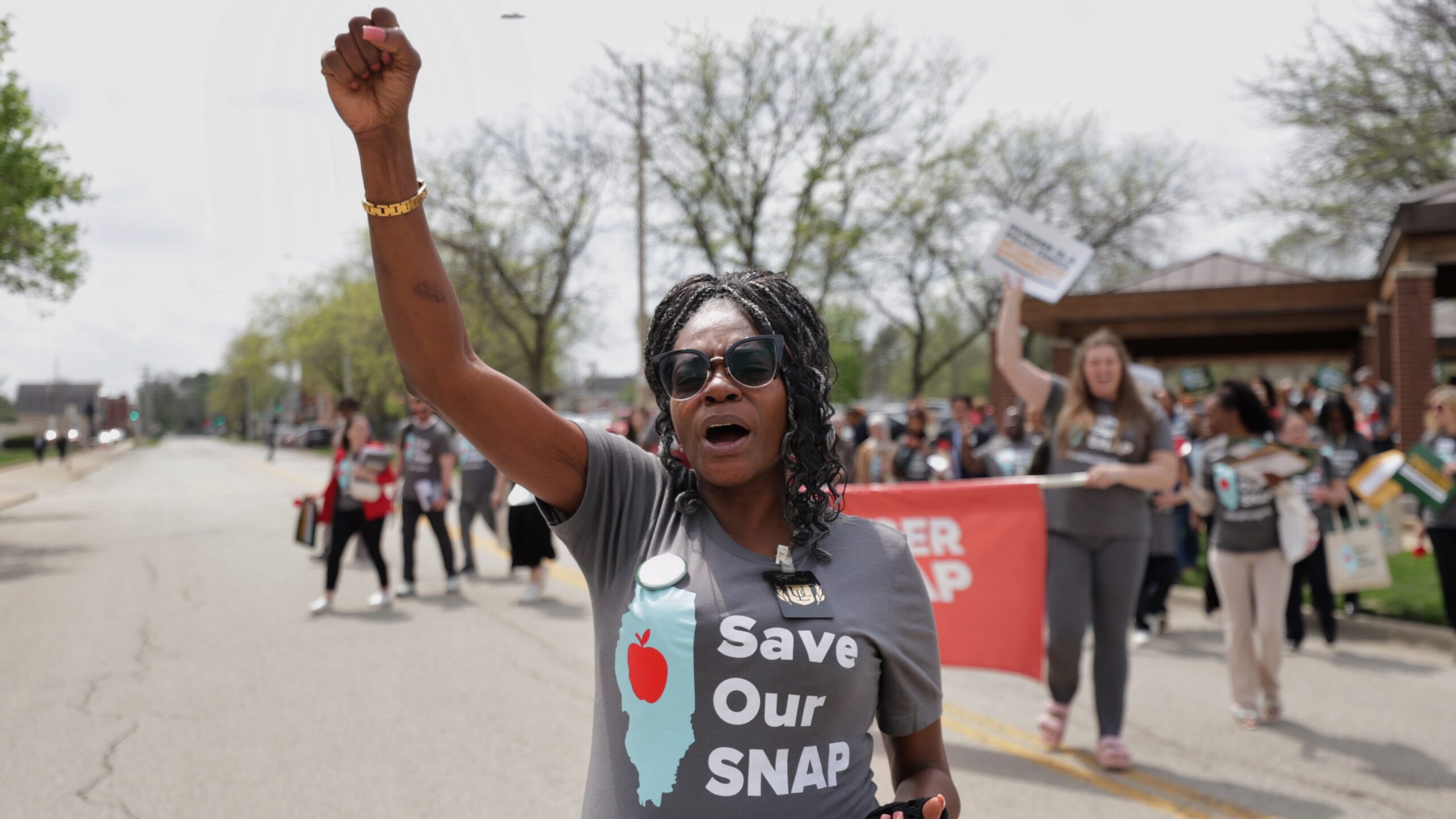

For Morehead, the issue was personal. Earlier in the year, her SNAP benefits had been cut off for four months without warning. When they were restored, her monthly benefit was nearly $250 lower.
“It was so hard for me,” she said. “I had to try to decide if I was going to pay bills, get gas in the car or buy food.”
That experience inspired Morehead to join other SNAP advocates in Springfield. “That has been the reason for me getting involved — just being that voice for people like myself.”
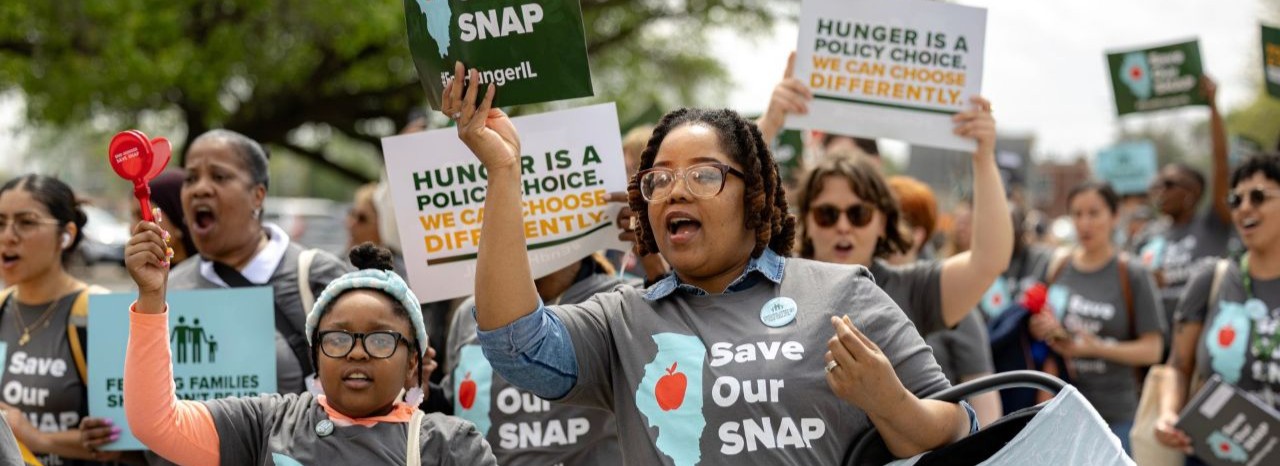
Her voice was one of many throughout fiscal year 2026 as the Food Depository worked to build a growing community of advocates for policy and systems change. Across three lobby days in Springfield, community members met with legislators and urged them to protect food access and support Illinois families facing the loss of SNAP benefits.
Advocates also took action from their own communities. They made more than 14,800 contacts with elected officials, reaching out to policymakers to urge action to protect food access. They submitted 1,821 witness slips, written statements that let people register their position on legislation with the Illinois General Assembly, and sent more than 500 postcards to the Governor’s Office urging action to protect food access.
When the new federal work requirements took effect on May 1, 2026, more than 120,000 people lost their benefits, creating new challenges for families already navigating high inflation and living costs.
To support these neighbors, the Food Depository developed the FRESH Program. The program would provide a one-time $400 payment to Illinois residents whose SNAP benefits were reduced or ended because they did not meet the new federal work requirements. The Food Depository and the Save Our SNAP coalition advocated vigorously for the program’s creation.
That collective work helped build support for a major policy win: $70 million for FRESH was included in the FY27 Illinois budget. The program now offers immediate support to people affected by the federal changes while reinforcing an important reality: Charitable food alone cannot replace SNAP. For every meal provided by the charitable food system, SNAP provides nine. FRESH is budgeted to help up to 175,000 Illinoisans.
The FRESH Act is one example of how the Food Depository approaches policy and systems change: by helping develop solutions, bringing community voices to the conversation and advocating alongside partners for policies that strengthen the food safety net. Providing food today helps neighbors meet an immediate need. Advocacy helps shape the policies and programs that determine whether people can access food in the first place.
The work continues. The Food Depository is committed to building a community of advocates to work alongside partners and neighbors to protect the food safety net and advance anti-hunger policies.
For Morehead, the reason to keep speaking up is simple: “We know how serious it is when you don’t have these vital programs.”
“That has been the reason for me getting involved — just being that voice for people like myself.”
– Natalie Morehead, advocate and SNAP recipient
In Illinois alone, SNAP is a nutritional lifeline for approximately 2 million people, providing essential food assistance to individuals, families, children, older adults, people with disabilities and veterans. For every meal provided by a food bank, SNAP provides nine.
Outraged by bad policy proposals and driven by the need to take action, supporters responded in record numbers to the urgent call for support at our Advocacy Action Center. The online platform makes it easier for participants to lift their voices in advocacy by providing template emails and call scripts to connect with legislators.
In fiscal year 2025, our advocacy network grew significantly, with over 2,100 advocates joining our Advocacy Action Center by June, marking a 180% increase from the previous year. Together, we sent more than 7,700 emails to Congress, opposing stricter work requirements for SNAP recipients and sweeping funding changes that would, for the first time ever, shift benefit costs to individual states.
While the budget reconciliation bill that passed in early July contained $200 billion in cuts to SNAP, our collective efforts nationwide led to modifications in the original proposals, lessening the severity of the changes. Though the passage of the bill was not the outcome we had hoped for, we are immensely proud of the way advocates continued to demand Congress protect key safety-net program. Our advocacy to end hunger continues.
Food Depository advocates also lifted their voices at the Illinois State Legislature. In April, our Food Equity Ambassadors and Community Council for Food Equity traveled to Springfield to lobby for two bills championed by the Food Depository. The first, the College Student Hunger Bill, aimed to simplify SNAP eligibility for students. The second bill sought to raise the minimum monthly SNAP benefit in Illinois from $23 to $75.
“There’s power in unity,” said Darriel Anderson, who has been managing the Circle Urban Ministries’ food pantry in Chicago’s Austin neighborhood for 10 years. She is also a graduate of the Food Depository’s Food Equity Ambassadors Program, and currently a member of the pilot “Food Equity Mobilizer” post-fellowship program.
“The more voices and examples of lived experiences we can bring in front of legislators, the more chance we have of making change,” said Anderson.